شعار
وطن

غرفة الصدمة الحرارية

المحفوظات
العلامات

غرفة الصدمة الحرارية

  • GR-1221-CORE Compliant Temperature Cycling Test Solution for Passive Optical Devices | Lab Companion TS Thermal Shock Chamber
    Aug 15, 2026
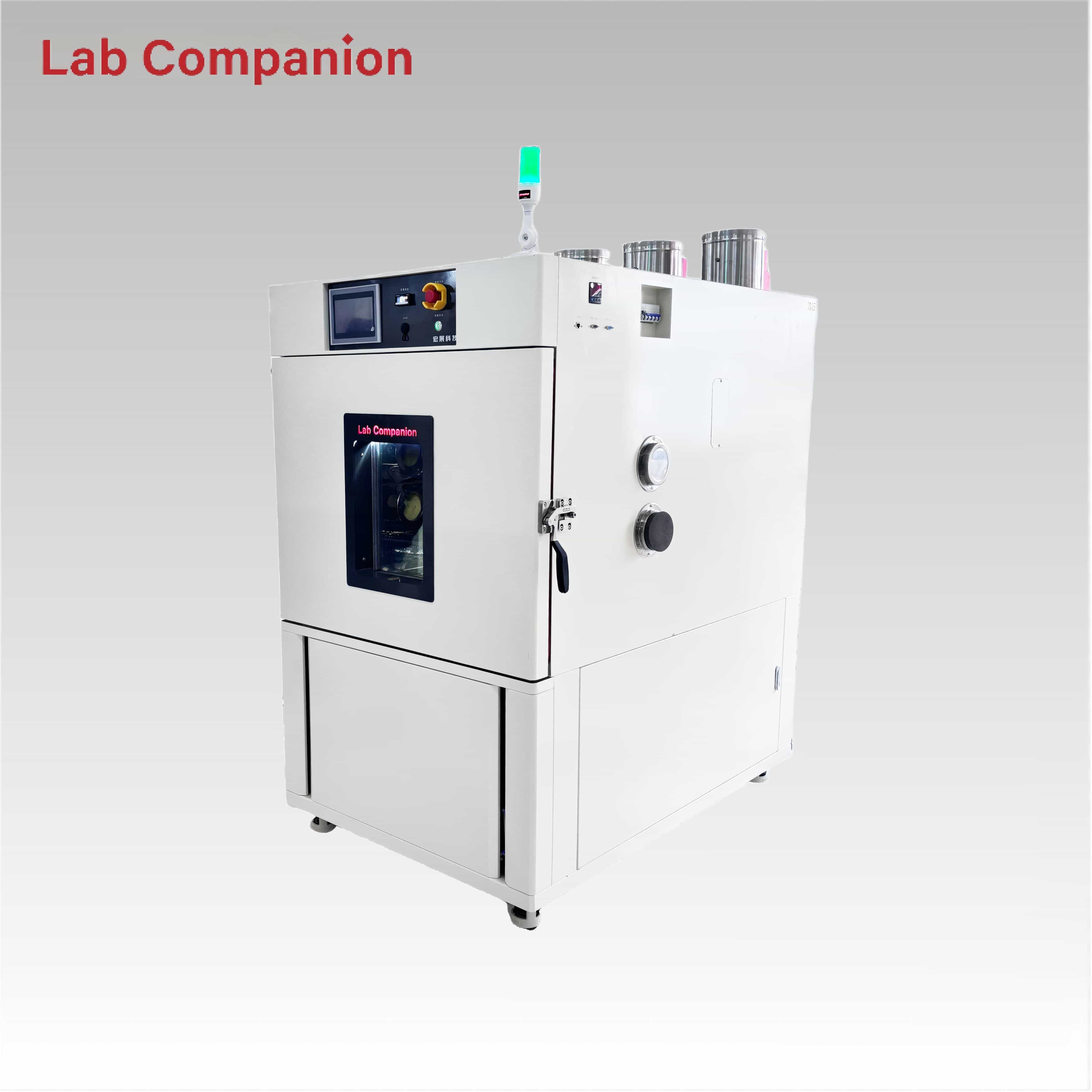
    1. Overview: The Importance of GR-1221-CORE for Passive Optical Component Reliability Passive optical devices, including optical splitters, WDM components, fiber couplers, and fiber connectors, serve as fundamental building blocks for optical communication transmission systems. As the industry’s authoritative reliability specification,GR-1221-CORE defines a complete set of environmental stress screening criteria for passive optical components, in which temperature cycling is one of the most critical reliability test procedures. A passive optical component consists of multiple materials such as optical fiber, adhesive resin, metal base, and plastic housing. Each material features a different coefficient of thermal expansion (CTE). Under rapid temperature transition, inconsistent thermal expansion and contraction generates continuous thermo-mechanical stress inside the device. This commonly leads to typical failures such as adhesive cracking, fiber delamination, coupling offset, and excessive insertion loss drift. To eliminate latent packaging defects and prevent early field failures, mainstream optical component manufacturers worldwide adopt GR-1221-CORE temperature cycling as a mandatory factory quality control procedure. The Lab Companion TS Series Thermal Shock Chamber is fully optimized and calibrated to meet GR-1221-CORE test requirements, providing standardized hardware, programmable test recipes, and custom fixture solutions for passive optical component reliability validation. 2. Industry Challenges in Traditional Temperature Cycling Testing Conventional thermal shock equipment often fails to meet the strict screening standards of GR-1221-CORE, resulting in insufficient stress excitation, poor test repeatability, and unstable batch testing. The main pain points are summarized as follows: 2.1 Insufficient Temperature Switching Speed GR-1221-CORE requires rapid temperature transition to generate effective thermo-mechanical stress that simulates long-term ambient temperature fatigue. Ordinary chambers feature slow cavity switching and gentle temperature gradients, which cannot produce enough stress to expose micro-cracks, weak bonding, and latent assembly defects. This leads to undetected risks and early product failure after shipment. 2.2 Poor Temperature Uniformity Causes Unstable Test Results Precision passive components such as fiber couplers and array gratings are highly sensitive to ambient temperature variation. Many standard chambers suffer from uneven airflow and large spatial temperature deviations. Samples in different positions undergo inconsistent thermal stress, causing uneven defect excitation and poor test repeatability. This often results in failure during third-party certification audits. 2.3 Lack of Custom Fixtures for Diverse Component Types Passive optical devices cover a wide range of shapes and sizes, including miniature connectors, block-shaped WDM devices, multi-channel splitters, and planar optical chips. Generic sample trays cannot fit all component specifications, easily blocking internal airflow, exacerbating temperature inconsistency, and causing fiber bending damage during testing, which introduces artificial test errors. 2.4 Low Long-Term Stability and Insufficient After-Sales Support GR-1221-CORE temperature cycling requires hundreds of continuous hot-cold cycles, demanding high durability from refrigeration systems, fans, and control modules. Most conventional equipment is not designed for long-duration high-load operation and is prone to downtime. In addition, limited global service coverage leads to long maintenance cycles, severely affecting mass production QC schedules. 3. Lab Companion TS Series Core Hardware Advantages for GR-1221-CORE Compliance The Lab Companion TS Thermal Shock Chamber is professionally optimized for optical component reliability testing. All performance parameters fully comply with GR-1221-CORE stress screening standards, delivering stable, repeatable, and certification-ready temperature cycling tests. 3.1 High-Precision Wide-Range Temperature Control The chamber supports a wide temperature range of -70℃ to +150℃ and achieves ≤10 seconds hot/cold cavity switching, satisfying the rapid temperature transition requirements of GR-1221-CORE. The optimized air circulation structure ensures excellent temperature uniformity throughout the chamber, enabling identical stress conditions for every sample. Users can freely set linear temperature change rates from 5℃/min to 25℃/min to match different component sensitivity levels. 3.2 Customized Dedicated Test Fixtures Lab Companion provides customized fixture solutions for all types of passive optical components, including precision positioning jigs for fiber connectors, dedicated racks for WDM devices, and multi-layer trays for optical splitters. Custom fixtures standardize sample placement, protect optical fibers from bending damage, and maintain unobstructed internal airflow, effectively eliminating temperature deviation and human-induced test errors. 3.3 Programmable Multi-Recipe Storage for Batch Testing The intelligent touch control system supports saving multiple sets of GR-1221-CORE test profiles. Users can independently configure and store high-temperature dwell time, low-temperature dwell time, and cycle counts for connectors, couplers, AWG devices, and other products. One-click recipe calling eliminates repeated parameter setup, greatly improving testing efficiency for mass production. 4. Full-Category Test Implementation for Passive Optical Components Lab Companion TS chambers enable standardized GR-1221-CORE temperature cycling screening for the full range of passive optical components: • Fiber Connectors: Verify the reliability of plastic housings and ceramic ferrules under alternating thermal stress to detect assembly gaps and structural defects. • Optical Splitters & Couplers: Evaluate the thermal fatigue resistance of epoxy adhesive layers to prevent delamination and cracking during long-term service. • AWG & Planar Optical Chips: Adopt controllable low-rate temperature ramping to apply uniform and mild thermal stress, protecting ultra-precision optical structures while completing standard reliability screening. All test procedures strictly follow GR-1221-CORE specifications for cycle times, temperature thresholds, and dwell durations, and have been widely deployed in optical component manufacturing laboratories. 5. Lab Companion Global Technical & Service Support 5.1 Global Service Network Lab Companion maintains a global service layout, providing fast on-site commissioning, fixture customization, calibration, and after-sales maintenance. Rapid response support minimizes equipment downtime and ensures continuous batch reliability testing. 5.2 Professional GR-1221-CORE Technical Guidance Our technical team is fully experienced in GR-1221-CORE test specifications. We provide professional parameter configuration, procedure optimization, and test standard guidance to help customers build fully compliant laboratory systems and pass third-party certification smoothly. 5.3 Complete Environmental Test Equipment Portfolio Beyond thermal shock chambers, Lab Companion offers a full lineup of environmental test equipment, including rapid temperature change chambers, constant temperature & humidity chambers, and walk-in environmental rooms. Our solutions cover GR-1221-CORE high-temperature aging, humidity endurance, and other environmental tests, and also support GR-468-CORE active component validation, providingone-stop reliability testing solutions for both active and passive optical devices. 6. Conclusion Temperature cycling screening defined by GR-1221-CORE is the most essential procedure to eliminate latent structural and adhesive defects of passive optical components and ensure long-term field reliability. Equipped with ultra-fast cavity switching, wide temperature range, high uniformity airflow design, custom fixture solutions, and intelligent programmable control, the Lab Companion TS Series Thermal Shock Chamber delivers fully GR-1221-CORE compliant reliability testing for passive optical components. Supported by global after-sales service and professional technical capabilities, Lab Companion helps optical communication manufacturers standardize quality control procedures and stabilize product reliability for global market delivery.
    إقرأ المزيد

  • LabCompanion® Rapid Temperature Change Chamber vs. Thermal Shock Chamber: Principle Differences & Application Guidelines LabCompanion® Rapid Temperature Change Chamber vs. Thermal Shock Chamber: Principle Differences & Application Guidelines
    Feb 27, 2026
    In environmental simulation testing, Rapid Temperature Change Chambers and Thermal Shock Chambers are both critical for verifying product reliability under temperature stress. However, many customers choose the wrong equipment due to unclear working principles and application scenarios: • Simulating natural gradual temperature changes with a thermal shock chamber → test results do not reflect real working conditions. • Testing resistance to instantaneous temperature shock with a rapid temperature change chamber → fails to meet test requirements. Wrong selection wastes investment, delays R&D, and weakens market competitiveness. Based on more than 20 years of industry experience, LabCompanion® explains the core differences between these two chambers to help you select the right equipment for your application. I. Core Principle Differences 1. Rapid Temperature Change Chamber Single-chamber design · Continuous & gradual temperature change • The entire test is performed in one single test space. • Heating and cooling systems work together to provide smooth, continuous, adjustable temperature ramping. • Temperature change rate: 5–20°C/min (higher rates available upon request). • LabCompanion® advantage: Binary cascade refrigeration, high-efficiency heating, and dual PID + AI intelligent control for stable, precise ramping without sudden fluctuations. • Simulates real-world natural temperature cycles. 2. Thermal Shock Chamber Multi-chamber design · Instant temperature switching • Typically 3 independent zones (hot chamber, cold chamber, test area); 2-zone models also available. • Test samples are rapidly transferred between hot and cold environments with no gradual ramping. • Temperature shock speed: > 5°C/s (up to 10°C/s for high-performance models). • LabCompanion® advantage: Independent heating & cooling systems, fast-acting valves, and airflow guidance for extreme temperature shock. • Temperature range:         ○ Hot zone: +60°C to +200°C ○ Cold zone: -70°C to 0°C (down to -196°C with liquid nitrogen) II. Key Parameters & Temperature Characteristics Rapid Temperature Change Chamber • Focus parameters: Ramp rate, temperature accuracy ±0.1–±0.5°C, uniformity ≤ ±2°C • Standard range: -70°C to 180°C (customizable to -220°C) • Temperature behavior: Continuous, smooth, gradual • Strength: High precision, uniform temperature field Thermal Shock Chamber • Focus parameters: Shock temperature range-196°C to +200°C, shock speed, recovery time • Temperature behavior: Instant, extreme, non‑gradual change • Strength: Ultra-fast shock, high stability for harsh testing III. Application & Selection Guide Choose Rapid Temperature Change Chamber if: • You need to simulate natural daily/seasonal temperature cycles. • You want to evaluate long-term reliability under repeated gradual temperature changes. • Industries:         ○ Automotive electronics & components ○ Consumer electronics ○ Semiconductors & PCBs ○ General electronic reliability testing Choose Thermal Shock Chamber if: • You need to simulate extreme, instantaneous temperature swings. • You want to expose material weaknesses, cracks, or failures quickly. • Industries: ○ Aerospace ○ Military & defense ○ High-performance alloys ○ Semiconductor packaging ○ Components used in extreme environments IV. LabCompanion® Solutions & Services 1. Dual-Mode Customization For customers needing both temperature cycling AND thermal shock, LabCompanion® provides customized dual-mode systems that support:      Single-chamber rapid temperature changeDual-chamber thermal shock      in one integrated unit, reducing cost and space.     2. Compliance & Quality All LabCompanion® chambers meet international and national standards, providing reliable alternatives to imported equipment at a competitive cost. 3. Global Service Support • Professional one-on-one application & selection support • Comprehensive after-sales guidance service (2-hour response) to assist with installation, calibration, maintenance, and training remotely • Full lifecycle support: professional guidance for installation, calibration, maintenance, and technical training V. Summary – How to Choose • Simulate real natural temperature changes → Rapid Temperature Change Chamber • Test resistance to extreme instant temperature shock → Thermal Shock Chamber LabCompanion® provides professional, reliable environmental test solutions to support your product R&D and quality assurance.
    إقرأ المزيد
  • ملخص لشروط اختبار LED
    Apr 22, 2025
    ما هو الصمام الثنائي الباعث للضوء (LED)؟ الصمام الثنائي الباعث للضوء (LED) هو نوع خاص من الصمامات الثنائية يُصدر ضوءًا أحادي اللون ومتقطعًا عند تطبيق جهد أمامي عليه، وهي ظاهرة تُعرف بالتألق الكهربائي. من خلال تغيير التركيب الكيميائي لمادة أشباه الموصلات، يُمكن لمصابيح LED إنتاج ضوء قريب من الأشعة فوق البنفسجية، أو المرئية، أو تحت الحمراء. في البداية، استُخدمت مصابيح LED بشكل أساسي كمؤشرات ضوئية وشاشات عرض. ومع ظهور مصابيح LED البيضاء، أصبحت تُستخدم الآن أيضًا في تطبيقات الإضاءة. تُعرف مصابيح LED بأنها مصدر الضوء الجديد للقرن الحادي والعشرين، حيث توفر مزايا لا مثيل لها، مثل الكفاءة العالية، وطول العمر الافتراضي، والمتانة مقارنةً بمصادر الضوء التقليدية. التصنيف حسب السطوع: مصابيح LED ذات السطوع القياسي (مصنوعة من مواد مثل GaP وGaAsP) مصابيح LED عالية السطوع (مصنوعة من AlGaAs) مصابيح LED عالية السطوع للغاية (مصنوعة من مواد متقدمة أخرى) ☆ ثنائيات الأشعة تحت الحمراء (IREDs): تصدر ضوء الأشعة تحت الحمراء غير المرئي وتخدم تطبيقات مختلفة.   نظرة عامة على اختبار موثوقية LED: طُوّرت مصابيح LED لأول مرة في ستينيات القرن الماضي، واستُخدمت في البداية في إشارات المرور والمنتجات الاستهلاكية. ولم تُعتمد في الإضاءة وكمصادر إضاءة بديلة إلا في السنوات الأخيرة. ملاحظات إضافية حول عمر LED: كلما انخفضت درجة حرارة وصلة LED، كلما زاد عمرها الافتراضي، والعكس صحيح. عمر الصمام تحت درجات الحرارة العالية: 10000 ساعة عند 74 درجة مئوية 25000 ساعة عند 63 درجة مئوية باعتبارها منتجًا صناعيًا، يجب أن تتمتع مصادر الإضاءة LED بعمر افتراضي يبلغ 35000 ساعة (وقت الاستخدام المضمون). تتمتع المصابيح الكهربائية التقليدية عادة بعمر افتراضي يصل إلى حوالي 1000 ساعة. من المتوقع أن تدوم مصابيح الشوارع LED لأكثر من 50 ألف ساعة. ملخص ظروف اختبار LED: اختبار الصدمة الحرارية درجة حرارة الصدمة 1 درجة حرارة الغرفة درجة حرارة الصدمة 2 وقت التعافي الدورات طريقة الصدمة ملاحظات -20 درجة مئوية (5 دقائق) 2 90 درجة مئوية (5 دقائق)   2 صدمة الغاز   -30 درجة مئوية (5 دقائق) 5 105 درجة مئوية (5 دقائق)   10 صدمة الغاز   -30 درجة مئوية (30 دقيقة)   105 درجة مئوية (30 دقيقة)   10 صدمة الغاز   88 درجة مئوية (20 دقيقة)   -44 درجة مئوية (20 دقيقة)   10 صدمة الغاز   100 درجة مئوية (30 دقيقة)   -40 درجة مئوية (30 دقيقة)   30 صدمة الغاز   100 درجة مئوية (15 دقيقة)   -40 درجة مئوية (15 دقيقة) 5 300 صدمة الغاز مصابيح LED HB 100 درجة مئوية (5 دقائق)   -10 درجة مئوية (5 دقائق)   300 صدمة سائلة مصابيح LED HB   اختبار درجة الحرارة والرطوبة العالية لمصباح LED (اختبار THB) درجة الحرارة/الرطوبة وقت ملاحظات 40 درجة مئوية/95% رطوبة نسبية 96 ساعة   60 درجة مئوية/85% رطوبة نسبية 500 ساعة اختبار عمر الصمام الثنائي الباعث للضوء 60 درجة مئوية/90% رطوبة نسبية 1000 ساعة اختبار عمر الصمام الثنائي الباعث للضوء 60 درجة مئوية/95% رطوبة نسبية 500 ساعة اختبار عمر الصمام الثنائي الباعث للضوء 85 درجة مئوية/85% رطوبة نسبية 50 ساعة   85 درجة مئوية/85% رطوبة نسبية 1000 ساعة اختبار عمر الصمام الثنائي الباعث للضوء   اختبار عمر درجة حرارة الغرفة 27℃ 1000 ساعة الإضاءة المستمرة عند تيار ثابت   اختبار عمر التشغيل في درجات الحرارة العالية (اختبار HTOL) 85℃ 1000 ساعة الإضاءة المستمرة عند تيار ثابت 100℃ 1000 ساعة الإضاءة المستمرة عند تيار ثابت   اختبار عمر التشغيل في درجات الحرارة المنخفضة (اختبار LTOL) -40℃ 1000 ساعة الإضاءة المستمرة عند تيار ثابت -45℃ 1000 ساعة الإضاءة المستمرة عند تيار ثابت   اختبار قابلية اللحام حالة الاختبار ملاحظات يتم غمر دبابيس الصمام الثنائي الباعث للضوء (على مسافة 1.6 ملم من أسفل المادة الغروانية) في حمام من القصدير عند درجة حرارة 260 درجة مئوية لمدة 5 ثوانٍ.   يتم غمر دبابيس الصمام الثنائي الباعث للضوء (على بعد 1.6 ملم من أسفل المادة الغروانية) في حمام من القصدير عند درجة حرارة 260+5 درجة مئوية لمدة 6 ثوانٍ.   يتم غمر دبابيس الصمام الثنائي الباعث للضوء (على مسافة 1.6 ملم من أسفل المادة الغروانية) في حمام من القصدير عند درجة حرارة 300 درجة مئوية لمدة 3 ثوانٍ.     اختبار فرن اللحام بالانصهار 240 درجة مئوية 10 ثواني   اختبار بيئي (إجراء معالجة لحام TTW لمدة 10 ثوانٍ عند درجة حرارة 240 درجة مئوية ± 5 درجة مئوية) اسم الاختبار معيار مرجعي راجع محتوى شروط الاختبار في JIS C 7021 استعادة رقم الدورة (H) دورة درجة الحرارة مواصفات السيارات -40 درجة مئوية ←→ 100 درجة مئوية، مع مدة بقاء 15 دقيقة 5 دقائق 5/50/100 دورة درجة الحرارة   60 درجة مئوية/95% رطوبة نسبية، مع تطبيق التيار   50/100 التحيز العكسي للرطوبة طريقة MIL-STD-883 60 درجة مئوية/95% رطوبة نسبية، 5 فولت RB   50/100  
    إقرأ المزيد
  • طرق الاختبار البيئي
    Mar 15, 2025
    يشير "الاختبار البيئي" إلى عملية تعريض المنتجات أو المواد إلى الظروف البيئية الطبيعية أو الاصطناعية في ظل معلمات محددة لتقييم أدائها في ظل ظروف التخزين والنقل والاستخدام المحتملة. يمكن تصنيف الاختبار البيئي إلى ثلاثة أنواع: اختبار التعرض الطبيعي ، والاختبار الميداني ، واختبار المحاكاة الاصطناعية. أول نوعين من الاختبارات مكلفة ، مستهلكة للوقت ، وغالبا ما تفتقر إلى التكرار والانتظام. ومع ذلك ، فإنها توفر انعكاسًا أكثر دقة لظروف الاستخدام في العالم الحقيقي ، مما يجعلهم أساسًا لاختبار المحاكاة الاصطناعية. يتم استخدام الاختبار البيئي للمحاكاة الاصطناعية على نطاق واسع في فحص الجودة. لضمان قابلية المقارنة والتكاثر لنتائج الاختبار ، تم إنشاء طرق موحدة للاختبار البيئي الأساسي للمنتجات. فيما يلي طرق الاختبارات البيئية التي يمكن تحقيقها باستخدام غرفة الاختبار البيئي:(1) اختبار درجات الحرارة العالية والمنخفضة: تستخدم لتقييم أو تحديد القدرة على تكييف المنتجات مع التخزين و/أو الاستخدام في ظل ظروف درجة الحرارة العالية والمنخفضة. (2) صدمة حرارية الاختبار: يحدد القدرة على تكييف المنتجات لتغيرات درجات الحرارة المفردة أو المتعددة والسلامة الهيكلية في ظل هذه الظروف. (3) اختبار الحرارة الرطب: يستخدم في المقام الأول لتقييم القدرة على تكييف المنتجات مع ظروف الحرارة الرطبة (مع أو بدون تكثيف) ، وخاصة التركيز على التغيرات في الأداء الكهربائي والميكانيكي. يمكنه أيضًا تقييم مقاومة المنتج لأنواع معينة من التآكل. اختبار الحرارة الرطب المستمر: يستخدم عادة للمنتجات حيث يكون امتصاص الرطوبة أو الامتزاز هو الآلية الأساسية ، دون تأثيرات تنفس كبيرة. يقيم هذا الاختبار ما إذا كان المنتج يمكنه الحفاظ على أدائه الكهربائي والميكانيكي المطلوب في ظل ظروف ارتفاع درجة الحرارة والرطوبة ، أو ما إذا كانت المواد الختم والعزل توفر حماية كافية. اختبار الحرارة الرطب الدوري: اختبار بيئي متسارع لتحديد القدرة على التكيف مع المنتج مع التغيرات في درجة الحرارة والرطوبة الدورية ، مما يؤدي غالبًا إلى تكثيف السطح. يستفيد هذا الاختبار من تأثير "التنفس" للمنتج بسبب تغيرات درجة الحرارة والرطوبة لتغيير مستويات الرطوبة الداخلية. يخضع المنتج لدورات التدفئة ، ودرجة الحرارة العالية ، والتبريد ، ودرجة الحرارة المنخفضة في غرفة الحرارة الرطبة الدورية ، تتكرر وفقًا للمواصفات الفنية. اختبار درجة حرارة الغرفة رطبة: أجريت في ظل درجة حرارة قياسية وظروف رطوبة نسبية عالية. (4) اختبار التآكل: يقيم مقاومة المنتج للمياه المالحة أو التآكل في الغلاف الجوي الصناعي ، يستخدم على نطاق واسع في منتجات المواد الكهربائية والإلكترونية والصناعة الخفيفة. يشمل اختبار التآكل اختبار التآكل في الغلاف الجوي واختبار التآكل المعجل الاصطناعي. لتقصير فترة الاختبار ، يتم استخدام اختبار التآكل المصطنع المتسارع ، مثل اختبار رذاذ الملح المحايد ، بشكل شائع. يقيم اختبار رذاذ الملح في المقام الأول مقاومة التآكل للطلاءات الواقية للوقاية في البيئات المحملة بالملح ويقيم جودة الطلاءات المختلفة. (5) اختبار العفن: قد تتطور المنتجات المخزنة أو المستخدمة في بيئات درجات الحرارة والرطوبة العالية لفترات ممتدة على أسطحها. يمكن أن تمتص خيوط العفن الرطوبة وإفراز الأحماض العضوية ، وخصائص العزل المهينة ، وتقليل القوة ، وضعف الخواص البصرية للزجاج ، وتسارع التآكل المعدني ، وتدهور مظهر المنتج ، وغالبًا ما يرافقه رائحة غير سارة. يقيم اختبار العفن مدى نمو العفن وتأثيره على أداء المنتج وسهولة الاستخدام. (6) اختبار الختم: يحدد قدرة المنتج على منع دخول الغبار والغازات والسوائل. يمكن فهم الختم على أنه القدرة الوقائية على حاوية المنتج. تشمل المعايير الدولية لحاويات المنتجات الكهربائية والإلكترونية فئتين: الحماية من الجزيئات الصلبة (مثل الغبار) والحماية ضد السوائل والغازات. يتحقق اختبار الغبار من أداء الختم والموثوقية التشغيلية للمنتجات في البيئات الرملية أو المتربة. يقيم اختبار الغاز والختم السائل قدرة المنتج على منع التسرب في ظل ظروف أكثر حدة من ظروف التشغيل العادية. (7) اختبار الاهتزاز: يقيم قدرة المنتج على التكيف مع الاهتزازات الجيبية أو العشوائية ويقيم النزاهة الهيكلية. يتم تثبيت المنتج على جدول اختبار الاهتزاز ويتعرض للاهتزازات على طول ثلاثة محاور عمودية متبادلة. (8) اختبار الشيخوخة: يقيم مقاومة منتجات المواد البوليمرية إلى الظروف البيئية. اعتمادًا على الظروف البيئية ، تشمل اختبارات الشيخوخة شيخوخة الغلاف الجوي ، والشيخوخة الحرارية ، واختبارات شيخوخة الأوزون. Atmospheric Aging Testing: Involves exposing samples to outdoor atmospheric conditions for a specified period, observing performance changes, and evaluating weather resistance. Testing should be conducted in outdoor exposure sites that represent the most severe conditions of a particular climate or approximate actual application conditions. Thermal Aging Testing: Involves placing samples in a thermal aging chamber for a specified period, then removing and testing their performance under defined environmental conditions, comparing results to pre-test performance. (9) اختبار عبوات النقل: Products entering the distribution chain often require transport packaging, especially precision machinery, instruments, household appliances, chemicals, agricultural products, pharmaceuticals, and food. Transport packaging testing evaluates the packaging's ability to withstand dynamic pressure, impact, vibration, friction, temperature, and humidity changes, as well as its protective capability for the contents.  These standardized testing methods ensure that products can withstand various environmental stresses, providing reliable performance and durability in real-world applications.
    إقرأ المزيد

اترك رسالة

اترك رسالة
إذا كنت مهتما بمنتجاتنا وتريد معرفة المزيد من التفاصيل ، فالرجاء ترك رسالة هنا ، وسوف نقوم بالرد عليك في أقرب وقت ممكن.
إرسال

وطن

منتجات

واتس اب

اتصل بنا